


.webp)

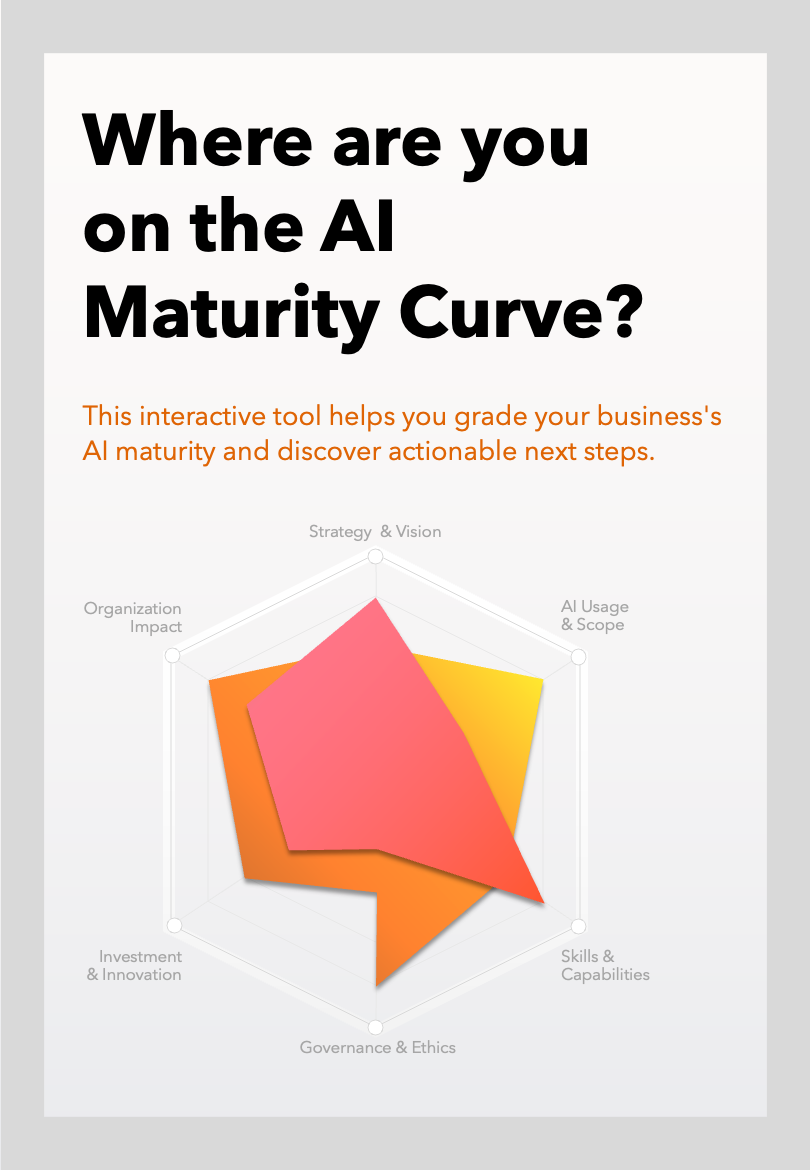




Four months are what it took for a mid-market equipment distributor spent in building a support chatbot that answered warranty questions correctly 19 times out of 20 in a sandbox environment. Leadership called the project a readiness win and greenlit two more. Then, reality hit. The built chatbot was routing live tickets into an unmonitored queue as the warranty database it had been tested against did not match the one the field team used to close claims. The pilot and the workflow did not meet during production. The fault is nobodies here, technically. But it does matter that no one asked the right questions because they saw success in a demo and mistook the result for AI readiness.
AI readiness is not a solid, dependable, and sacrosanct score. Rather, it runs on four conditions: data, workflow, ownership, and economics. When checked only by the team that built it, the confidence score measures conviction alone. For optimal results, each condition should be checked by someone outside the team that built the pilot. Truly auditable AI readiness only exists when external parties with no stake in the outcome can check against evidence and either confirm or reject the validity of the readiness in question. In contrast, businesses use a maturity score, which is usually an aggregate impression dressed up as a number, generated by the people whose budgets and reputations ride on the answer.
The confidence score and the obstacle list use the same categories
The contrast between the confidence and reality shows up as a measured, industry-wide pattern across two studies published months apart in 2026.
Precisely's fourth annual State of Data Integrity and AI Readiness study, conducted with the Center for Applied AI and Business Analytics at Drexel University's LeBow College of Business. It surveyed more than 500 senior data and analytics leaders at large U.S. and EMEA enterprises. Among them, 87% rated their infrastructure ready for AI, 86% rated their skills ready, and 88% rated their data ready. The same survey then asked what stood in the way of AI success. Infrastructure, skills, and data readiness came back as the top-cited obstacles, at 42%, 41%, and 43% respectively.
87% of data and analytics leaders rate their infrastructure ready for AI. 42% name infrastructure as their biggest obstacle to AI success. Source: Precisely, 2026 State of Data Integrity and AI Readiness, with Drexel University's LeBow College of Business.
A second study points at the same disconnect from a different angle. Harvard Business Review Analytic Services, working with Cloudera, surveyed more than 230 executives responsible for their organizations' AI data decisions in October 2025. Of those, 7% called their data completely ready for AI, and 27% called it not very ready or not ready at all. Two thirds landed in the ambiguous middle, where a self-reported maturity score stops meaning anything specific.
Two surveys, run independently, arrive at one pattern: executives rate their own readiness high and specific, then rate their own obstacles high and specific, using the identical categories. Clearly these numbers moving in both directions at once measures mood, over reality.
The pattern is not confined to one industry, and it does not describe deception. When a director is asked to score infrastructure readiness for a steering committee, they have every incentive to report the platform as ready. The same director, asked in the same meeting to name obstacles for next year's budget request, has every incentive to name the same platform as underfunded. Both answers can be sincere, but neither are readiness measurements.
Who feels the pinch of this mostly are mid-market companies, for a specific reason. Large enterprises can absorb a canceled AI initiative inside a portfolio of hundreds. Mid-market companies that greenlit three initiatives off an inflated confidence score does not have the same slack. The variance the framework below is built to surface, one workflow ready, not 3, cannot get lost in an average of a portfolio that size.
"Most leadership teams are measuring their own confidence and calling it a technology score. That is a procedural mistake and not a technical one. And the fix is refusing to grade your own test." - Anand Krishnan, CEO, Thinkbridge
.webp)


.png)