Thought leadership12 minute read
Mind the Gap: book summary
A 5-Page Summary of my book "Mind the Gap - A Mid-Market Business Owner’s Guide to Using Technology to 10x Their Business"
Thought leadership12 minute read
A 5-Page Summary of my book "Mind the Gap - A Mid-Market Business Owner’s Guide to Using Technology to 10x Their Business"
This summary encapsulates the key insights from "Mind the Gap - A Business Owner’s Guide to Using Technology to 10x Their Business," focusing on the mindset shift needed to effectively leverage technology for business growth and avoid common pitfalls. An accompanying audio podcast is also available.
Page 1: Bridging the Divide - Rethinking Technology for Growth
The authors, Sai Ganesh and Anand Krishnan, address the overwhelming and confusing nature of technology for business owners. They argue that growing a business doesn't necessitate adopting the latest tech but rather requires a smarter way to think about technology that aligns with the business's speed and needs. The book aims to help business owners cut through the noise and make technology work for them, not against them.
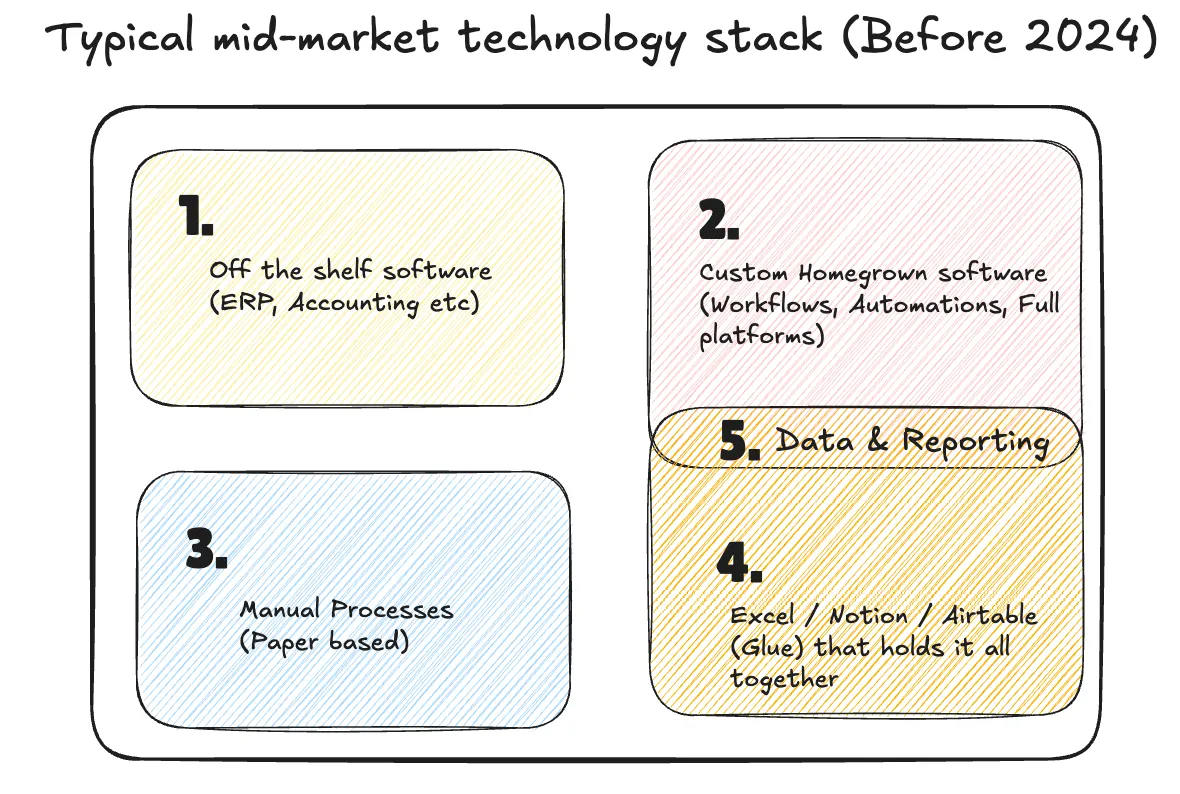
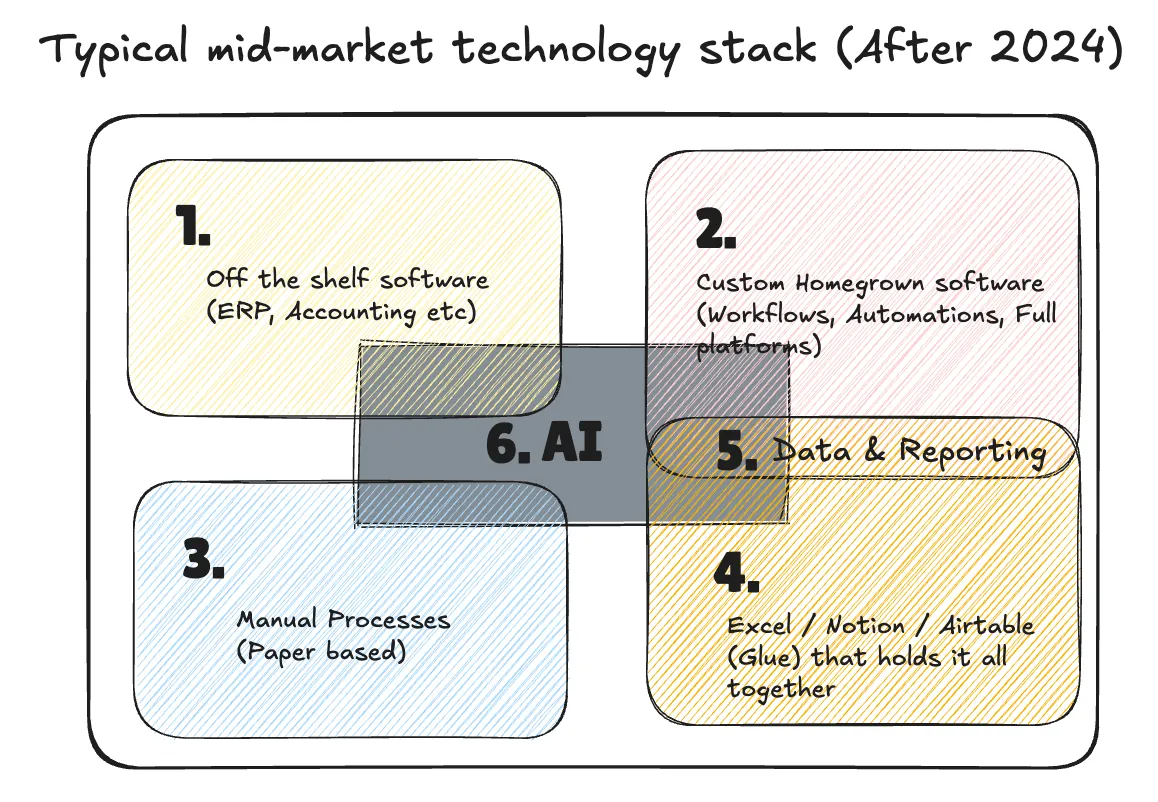
The central theme revolves around the "gap" - the frustrating disconnect between the promises of technology and the reality of its implementation and impact in real-world business operations. This gap manifests in six common components:
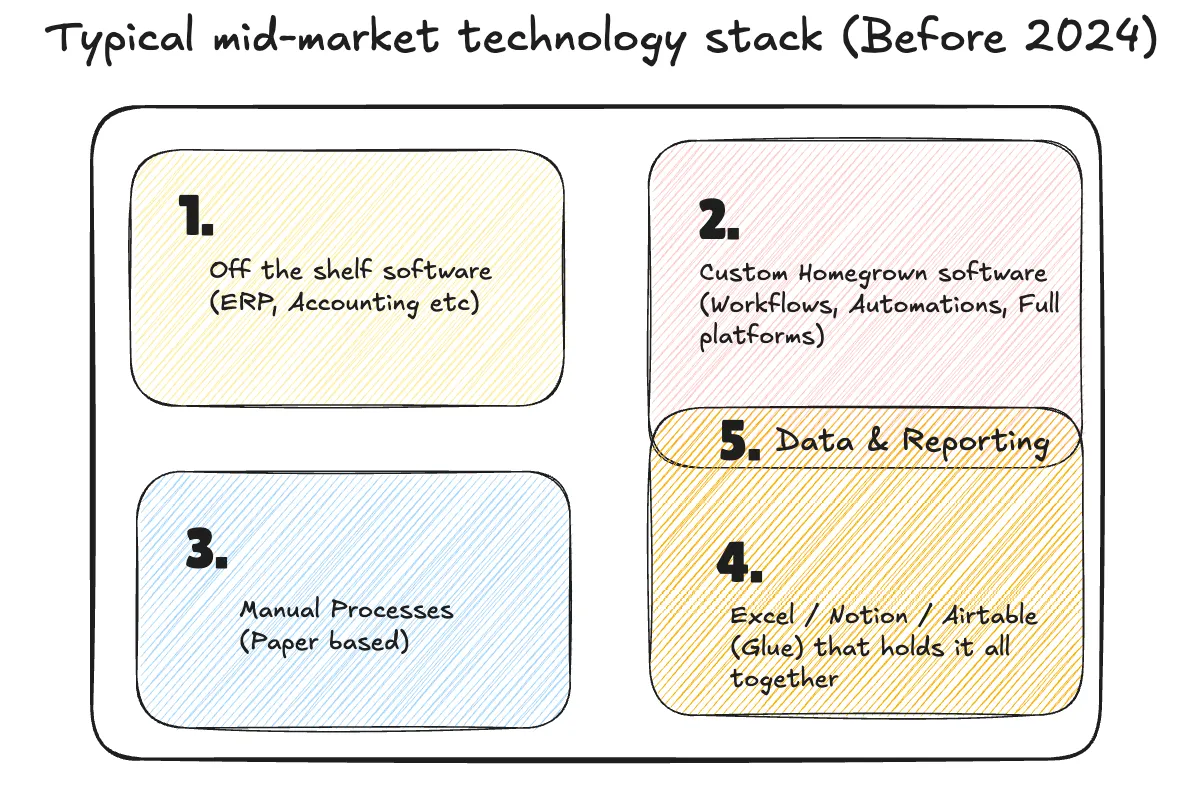
This results in massive capability gaps, where the promise of technology never matches the reality of efficient operations. The authors illustrate this with the analogy of a WIFI-enabled coffee maker, highlighting that technology often only reminds us of the foundational tasks we still need to perform. The book aims to explore these components in detail and provide a systematic approach to close these gaps.
The authors also address the "paradox of knowing what works but not doing it". Just as people struggle to maintain healthy habits despite knowing their importance, businesses often chase the "next big thing" in technology instead of focusing on simplifying processes, integrating systems, and focusing on fundamentals. The book intends to go back to basics, offering practical and actionable steps rather than complex theories. The core theme is that action speaks louder than words. Readers will gain a systematic approach to integrating technology, understand when to adopt and when to reject new tools, learn to leverage data, differentiate trends from timeless principles, and create a 90-day roadmap. The book builds on principles from classic business literature, emphasizing that technology's effectiveness is tied to the processes and people behind it. The ultimate goal is to help businesses identify real bottlenecks, make smarter technology decisions, and build a business that runs smoother, scales faster, and is more valuable.
The first chapter emphasizes that technology should move at the speed of your business—not slow it down. Businesses often invest in expensive systems that take months to implement, are difficult for employees to use, and ultimately hinder productivity. Most businesses evolve their tech stack organically, leading to a collection of too many tools, including off-the-shelf software, homegrown systems, manual processes, and the ubiquitous spreadsheet. Mid-market companies often lack the resources for strategic tech initiatives, constantly firefighting urgent issues. The chapter debunks the "bigger, more powerful’ myth," stating that complex systems requiring lengthy implementation are not the answer if immediate solutions are needed. Many businesses over-customize large systems, force employees to adapt their workflows to the software, and become overly reliant on IT teams and consultants. Instead, technology should enhance speed, and the best solutions integrate with existing workflows with minimal friction. The chapter advocates for prioritizing quick wins over big transformations, adopting solutions that can be set up in weeks, require minimal training, and provide immediate value. Keeping it simple is crucial, as complexity kills speed. Businesses should focus on proven solutions that deliver results rather than chasing every new trend.
Page 2: The Perils of Software Overload and the Primacy of Process
Chapter 2 addresses the problem of too much software, not enough simplicity. Businesses are often "drowning in software," with tools for every conceivable need, leading to increased complexity rather than ease. Software sprawl is real, and it’s killing productivity. The chapter introduces a crucial rule: no software is the best kind of software, emphasizing the need to question whether a new tool is truly necessary before adding it. Often, the best solution isn’t adding more software—it’s using less.
The promise of software is efficiency, but the reality is often the opposite. Over-reliance on software leads to:
Ultimately, businesses end up managing a complex tech maze instead of focusing on their core operations. The chapter highlights the real cost of unnecessary software, including wasted time, lost productivity, poor customer experience, subscription overload, and tech fatigue. Software vendors often oversimplify the complexity of software implementation and use. Many businesses add software to solve non-existent problems. Before buying, businesses should ask if they can simplify the process instead and whether the tool addresses a real business need or just adds complexity. In many cases, removing software makes things easier, not harder. Key takeaways include that more software doesn't equal more efficiency, software should simplify not complicate, tech bloat is real, cutting software can increase speed, and businesses should fix processes first, then add technology. The chapter concludes with the adage "A fool with a tool is still a fool," setting the stage for the next discussion on the limitations of technology alone.
Chapter 3 delves into the misconception that technology alone can fix everything. The chapter emphasizes that "A fool with a tool is still a fool". Technology cannot remedy broken processes, poor leadership, or flawed decision-making. Believing that a new CRM, ERP, AI, or project management tool will magically solve underlying issues is a common trap. The chapter stresses that the right processes, training, and strategy must be in place first. Technology is merely a tool, and its usefulness depends entirely on the user. Businesses often adopt technology based on industry trends or hype rather than specific needs. A better approach involves identifying a problem first and then determining if technology can provide a solution. The chapter highlights several common misuses of technology:
The chapter provides guidance on how to make technology work for you:
A real-world example illustrates a retail company that improved customer experience by better utilizing their existing CRM and improving workflows instead of investing in an expensive AI chatbot. Key takeaways reiterate that technology won't fix broken processes or bad strategy, tools should solve real problems, processes should be fixed before adding technology, existing tools should be maximized before buying new ones, and training is essential.
Page 3: Navigating the AI Landscape and Building a Data-Driven Foundation
Chapter 4 addresses the prevalent AI hype vs. reality. While AI is powerful, it is not magic and can create more problems if misapplied. The chapter emphasizes that AI is only as good as the data and processes behind it and is not a replacement for good software and strong processes. AI companies often make grand promises about automation, content generation, and decision-making, but the reality is more nuanced. The chapter outlines several key points:
The chapter stresses that AI is only as good as the data it’s fed, and outdated, incomplete, duplicated, or incorrect data will lead to faster mistakes. Businesses need to clean up their data and ensure their software systems are functioning properly before implementing AI. Similarly, AI still needs a strong software foundation to interact with, as it enhances but does not eliminate the need for structured systems. The chapter provides examples of how AI can be used effectively for automating basic inquiries, enhancing decision-making through insights, and personalizing user experiences. However, it also warns against the wrong ways to use AI:
Key takeaways reiterate that AI is not magic, cannot replace software, is data-dependent, works best for specific tasks, should not fix broken processes, and needs human oversight. Businesses should focus on where AI adds real value instead of chasing hype.
Chapter 5 shifts focus to data as the foundation of everything, emphasizing the principle of "Garbage In, Garbage Out". Data should be a competitive advantage, enabling smarter decisions, predicting customer behavior, and improving efficiency. However, most businesses are making decisions based on bad data. Inaccurate, outdated, or incomplete data renders insights useless. The chapter highlights why bad data is a significant problem: inaccurate reporting, wasted resources, poor customer experiences, missed opportunities, and compliance issues. Common sources of bad data include duplicate records, inaccurate information, outdated data, inconsistent data across systems (lack of a single source of truth), and poorly structured data. The chapter provides a step-by-step process to fix data and build a strong foundation:
The chapter emphasizes the ROI of good data, including better decisions, cost savings, improved customer experiences, and unlocking AI's full potential. The key takeaway is to start with your data before investing in more software or AI.
Page 4: Identifying Bottlenecks and Establishing a Strategic Tech Order
Chapter 6 addresses the issue of throwing technology at the wrong problems. Technology can only accelerate what already works, and adding new software to broken processes will merely create faster chaos. The chapter emphasizes the importance of finding the real problems or bottlenecks in a business – the slowest parts of the process that limit overall efficiency. Bottlenecks can manifest as slow approval processes, manual invoicing systems, overwhelmed customer service teams, or marketing hindered by bad data. Before investing in technology, these bottlenecks must be identified. The chapter draws insights from Eliyahu M. Goldratt’s "The Goal," highlighting that a system’s performance is limited by its bottlenecks. The Five Focusing Steps for fixing bottlenecks are introduced: identify, exploit, subordinate, elevate, and repeat. Identifying bottlenecks involves looking at where work piles up, tracking manual and repetitive work, looking for mismatched data, and identifying decision-making delays. The chapter also introduces "Throughput Accounting" from "The Goal," which focuses on increasing the rate at which the company generates money through sales (Throughput), minimizing money tied up in goods (Inventory), and managing money spent to run the business (Operating Expense). When considering technology, businesses should assess whether it increases throughput. Key takeaways stress that tech should solve real bottlenecks, problems should be identified before investing, processes should be fixed first, tech should be used where it truly helps, and the Five Focusing Steps should be followed.
Chapter 8 introduces the "Tech Hierarchy of Needs," a structured approach to implementing technology where each layer builds on a stable foundation, similar to Maslow's Hierarchy of Needs. The chapter argues that businesses often prioritize technology backward, chasing trends before fixing fundamental issues, leading to a fragile and ineffective system. The six levels of the hierarchy are:
The chapter emphasizes that skipping foundational layers leads to inefficiencies and failure. It addresses the desire for immediate results but stresses that building technology the right way, following the hierarchy, is crucial for sustainable success. Key takeaways reiterate the importance of building on a strong foundation, starting with process and data clarity, the criticality of leadership and culture, and positioning AI and emerging technologies as the final step.
Page 5: Strategic Tech Decisions and Cultivating a Tech-Forward Culture
Chapter 9 tackles the critical decision of "Buying vs. Building" technology, highlighting the hidden costs and trade-offs of each. The chapter emphasizes that this is a strategic business decision impacting cost, control, differentiation, and long-term value. Buying off-the-shelf software offers faster implementation, lower upfront costs, vendor support, and built-in best practices, but can suffer from a one-size-fits-all approach, hidden costs, limited customization, and vendor lock-in. Buying makes sense for common, well-defined needs where quick deployment and limited technical expertise are factors. Conversely, building custom software provides full tailoring, long-term cost savings (no recurring fees), competitive differentiation, and more control, but comes with high upfront costs, long development times, ongoing maintenance responsibilities, and technical risks. Building is advantageous for unique processes, deep integration needs, developing proprietary technology as a core asset, or when the cost of adapting existing solutions is higher than building from scratch. The chapter argues that businesses that own their technology gain a significant advantage, controlling their innovation roadmap, integrating deeply with their processes, and increasing their business valuation. The future of business software lies in owning your destiny rather than delegating it entirely to third-party vendors.
Chapter 10 focuses on "Driving Technology Adoption," recognizing that getting people to actually use new tools is often harder than buying them. The chapter outlines the five stages of technology adoption (Innovators, Early Adopters, Early Majority, Late Majority, Laggards). Common reasons for technology adoption failure include lack of clear benefits, fear of change, lack of leadership buy-in, poor training, overcomplicating the change, and no incentives. The chapter provides a seven-step approach to successful technology adoption:
A real-world example illustrates how a consulting firm successfully increased project management system adoption by addressing training, leadership engagement, integration, and incentives. Key takeaways emphasize that people must see clear benefits, leadership must set the example, training should be engaging and specific, and adoption needs to be measured and reinforced.
The concluding chapters emphasize that becoming a tech-forward business requires a strategic approach aligned with business goals, selecting and implementing the right tech based on business needs and value stream mapping, building for long-term success by focusing on core needs over trends, understanding that talent and culture are multipliers of technology's impact, avoiding common pitfalls such as buying without a business case or over-relying on vendors, and ultimately positioning the business as a tech-forward category leader by creating indispensable value for customers and maximizing valuation. The book concludes with a "Business Owner’s Tech Manifesto," reiterating the core principles: technology should serve business goals, less software is often better, data is foundational, technology is only as good as its users, AI enhances but doesn't replace core elements, and a strategic, value-driven approach is essential for long-term success and competitive advantage. The bonus chapter specifically addresses SME business owners in the age of AI, advocating for a problem-first approach and highlighting the advantages SMEs possess in leveraging new technologies. The appendix provides practical templates for customer empathy interviews, persona creation, customer journey mapping, and value stream mapping to aid in practical implementation.
Tell us what is holding your operations together. thinkbridge will show you what it looks like built right.